marketing.blr@precisetcc.com - GST NO. : 29AAOCP3174H1ZY
- Send Email

Gauge Calibration Services
Leading of 2D Height Gauge Calibration Services, Bore Gauge Calibration Services, Bridge CAM Gauge Calibration Services, Flakiness Gauge Calibration Services, Force Gauge Calibration Services, Proving Ring Gauge Calibration Services and Weld Fillet Gauge Calibration Services from Bengaluru.
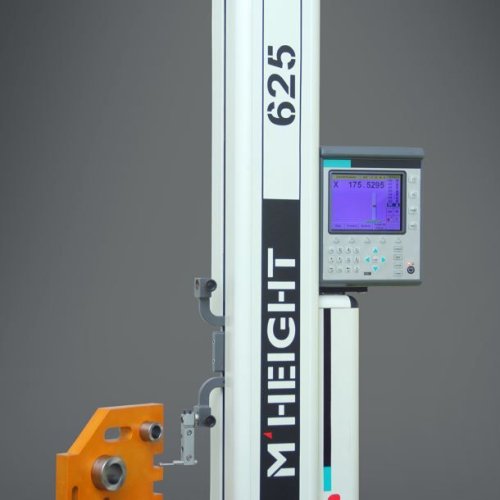
This instrument is widely used for measuring mechanical parts across various industries. It is ideally placed in workshops, near machining centers, or in dedicated measuring rooms to ensure efficient workflow. Designed for ease of use, it enables operators to perform quick, accurate, and reliable measurements directly during production. This helps improve quality control and reduces inspection time. Its user-friendly operation ensures consistent results, making it an essential tool in manufacturing environments. Regular calibration services are recommended to maintain measurement accuracy, ensure compliance with standards, and support dependable performance in production and quality assurance processes.
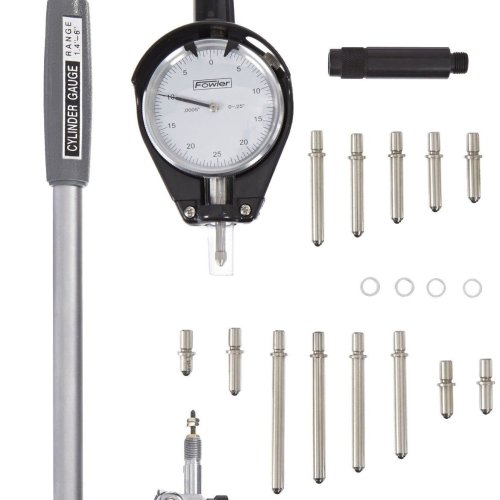
Bore gauges are precision instruments used to measure the internal diameter of holes (bores), commonly applied in equipment maintenance to monitor wear and determine when parts need replacement. To take a measurement, the gauge is inserted into the bore and gently moved across the diameter while observing the dial indicator. As the gauge is rocked back and forth, the reading will increase to a maximum point and then begin to decrease. The highest reading, known as the peak or maximum point, represents the true diameter of the bore.
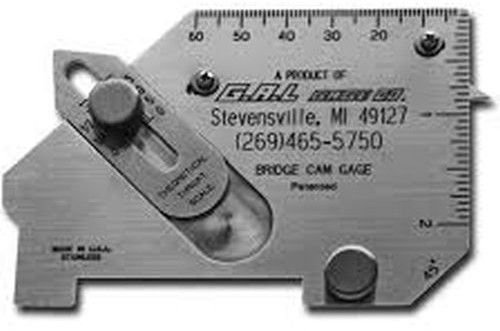
The Bridge Cam Gauge, also known as the Cambridge gauge, is a precise and durable instrument used in both workshop and field applications. It is designed to measure multiple weld parameters, including fillet weld leg length, throat thickness, weld reinforcement height, undercut depth, joint misalignment, and angle of preparation. This versatile tool helps ensure weld quality and compliance with industry standards.
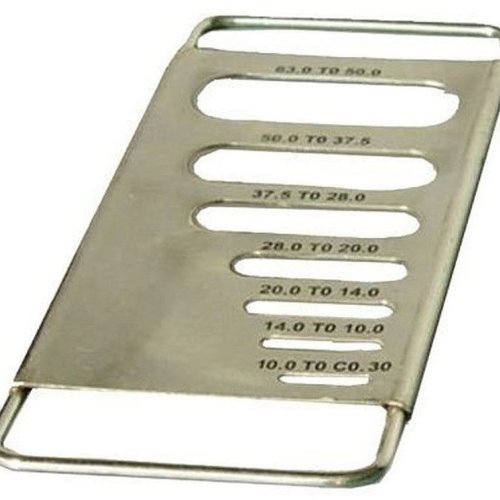
A flakiness (thickness) gauge is used to determine whether aggregate particles are classified as flaky, meaning their thickness is less than 0.6 times their nominal size. To perform the test, the aggregate sample is first separated into standard sieve fractions, typically ranging from 6.3 mm to 63 mm. Each fraction is then checked using the gauge slots to identify particles that fall below the specified thickness, helping assess the quality and suitability of aggregates for construction purposes.
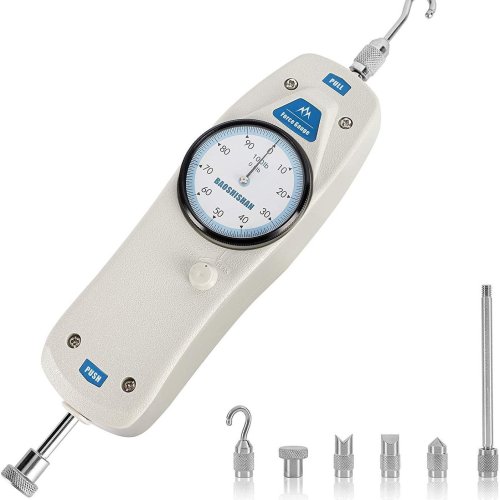
A force gauge, also known as a force meter, is a precision instrument used to measure tension and compression forces. It is widely applied in research and development, laboratory testing, quality control, production processes, and field environments. Force gauges are commonly available in two types: mechanical force gauges and digital force gauges, both designed to deliver accurate force measurement results. Calibration services for force gauges ensure measurement accuracy by verifying performance against certified reference standards. Regular calibration improves reliability, consistency, and precision, while reducing errors and ensuring compliance with industry requirements across diverse industrial and scientific applications for dependable results.
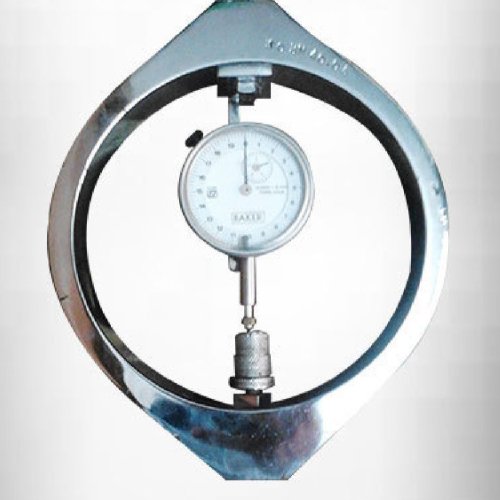
A proving ring is a precision device used for measuring force in testing and calibration applications. It consists of a steel alloy elastic ring of known diameter with a sensitive measuring device mounted at its center. Proving rings are manufactured in various sizes to suit different force measurement requirements. Calibration services for proving rings ensure accurate force measurement by verifying their response against standard reference loads. Regular calibration helps maintain precision, reliability, and consistency in testing results. It also ensures compliance with industry standards and supports dependable performance in laboratories, research facilities, and industrial quality control and material testing environments.
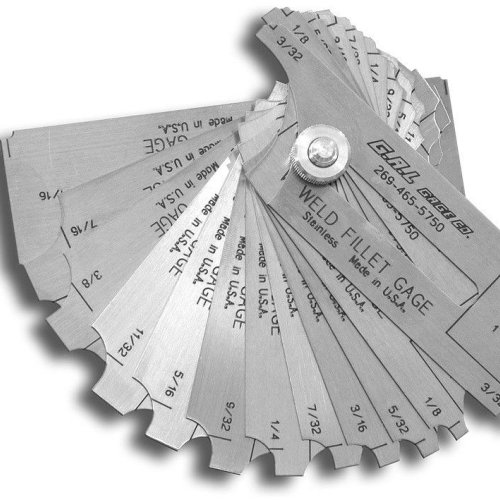
Fillet weld size is determined by the leg length of the largest right triangle that can be inscribed within the weld’s cross-sectional area. A radius gauge, also known as a fillet gauge, is used to measure the radius of curved surfaces. During inspection, the gauge is placed against the edge while a light source is positioned behind it. If light passes between the gauge and the surface, it indicates a mismatch, meaning the radius is inaccurate and may require correction.
